Amsterdam Layover: Walking Tour, Canal Cruise & Transfer
Airport pickupCanal cruisePrivate
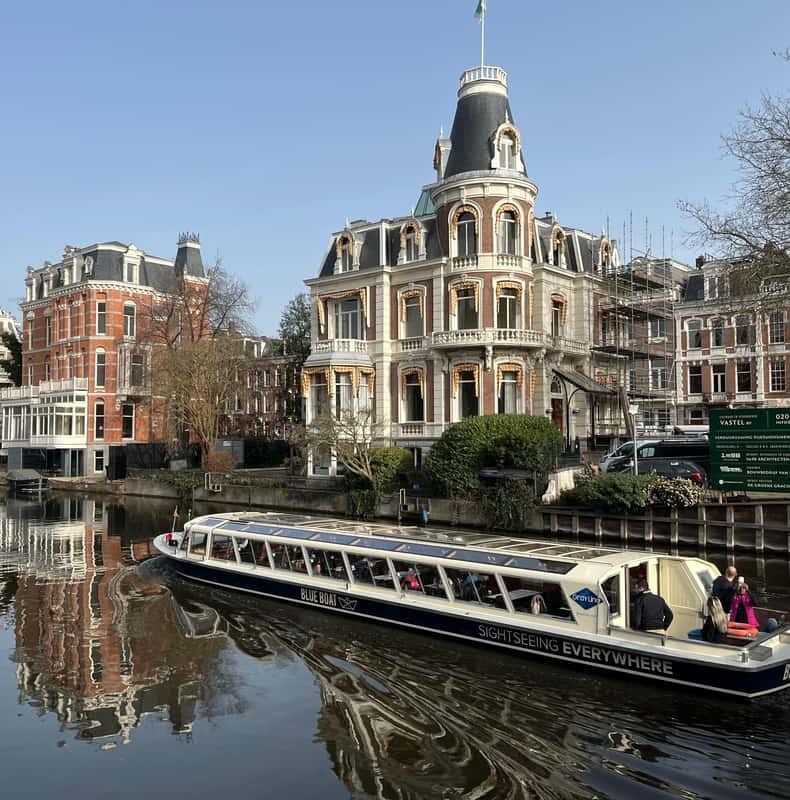
The boat is glass-topped, so the hour on the water reads the same in November as it does in June.
From $330 per person
Rain here is a nuisance. Daylight is a constraint. On a winter connection it is the second one that decides what you can physically see.
Start with the consequence rather than the numbers. A connection that lands at two in the afternoon in December has about two and a half hours of light left in it. The same connection in June has eight. Nothing else about the day changes — the same train, the same tours, the same distances — but what you can see changes completely.
Rain matters less than you would expect. It falls on nine to fourteen days a month all year round, it usually arrives as showers rather than as a settled front, and the two things a layover most often involves — a car and a glass-topped boat — are both indoors.
Temperatures and rainfall below are the Royal Netherlands Meteorological Institute's 1991–2020 normals for Amsterdam. Sunrise and sunset are for the fifteenth of each month, in local time.
The coldest month and one of the wettest, with rain on twelve days in an average January. Daylight runs from a quarter to nine to just before five, so a connection landing after two has barely two hours of light. Everything indoors is quiet and everything outdoors is cold. A car tour makes far more sense than a walking one.
The coldest nights of the year fall here, at an average low of one degree, but the rain eases to about eleven days. The gain in daylight is the story: nearly two hours more than January by the middle of the month. Canal boats run all winter and are glass-topped, which makes the hour on the water the warmest part of the day.
The month the city reopens. Daytime highs reach double figures, rainfall drops to about ten days, and sunset passes half past six. Wind off the North Sea makes it feel colder than the number suggests, especially on the water. Tulip season begins at the end of the month in the fields north of the airport.
The driest month of the year, at under forty millimetres across nine days. Nearly fourteen hours of daylight and a comfortable fourteen degrees by afternoon. This is the best month for a layover here by a clear margin, and it is also peak tulip season, which fills the countryside tours.
Nearly sixteen hours of light, sunset at half past nine, and the highest sunshine total of the year at 231 hours. Rain returns slightly but stays on about nine days. A late-afternoon connection now has a full evening of light in it, which changes what a six-hour wait can hold.
The longest days: sixteen and three quarter hours in the middle of the month, and sunset a few minutes past ten. Rainfall picks up to sixty-five millimetres. Warm rather than hot, at twenty degrees. Terraces are full, the canals are busy, and a boat is genuinely pleasant rather than merely dry.
The warmest month, at an average high of twenty-two and a half. Rain rises sharply to eighty-two millimetres over eleven days — Dutch summer rain arrives as short heavy showers rather than all-day drizzle. Still more than sixteen hours of daylight, so a shower costs you an hour and not the day.
The wettest month of the year, at ninety-nine millimetres over twelve days, which is the opposite of what most travellers assume. It is also the second warmest and still carries fifteen hours of light. Book something that does not depend on staying dry outdoors for two hours at a stretch.
Warm afternoons, cooler mornings and a noticeable drop in daylight — nearly four hours less than June. Rain stays high at eighty-four millimetres. The city is quieter than in August, the light on the canals is at its best, and a late-morning connection is well timed.
Sunset falls back below seven o'clock and the wet season is properly under way, with rain on twelve days. Ten and a half hours of light. This is when a private vehicle starts to be worth more than the sightseeing it enables, because it is the difference between a good afternoon and a wet one.
The greyest month, with the second-lowest sunshine total of the year at sixty-seven hours and rain on thirteen days. Sunset before five. A midday arrival has about four hours of usable light, and an afternoon one has almost none. Plan indoors, or plan a car.
The shortest days of the year: seven and three quarter hours of light, sunrise at a quarter to nine, sunset at half past four. It rains on fourteen days, more than any other month. A connection landing after one in the afternoon is a night-time layover, and the city is lit for it — which is its own kind of good.
| Month | Sunrise | Sunset | Daylight | Rain |
|---|---|---|---|---|
| January | 08:43 | 16:56 | 8h 12m | 66.5 mm over 12.2 days |
| February | 07:57 | 17:52 | 9h 55m | 54.7 mm over 10.8 days |
| March | 06:55 | 18:43 | 11h 48m | 51.8 mm over 9.7 days |
| April | 06:44 | 20:37 | 13h 54m | 39.6 mm over 8.6 days |
| May | 05:45 | 21:28 | 15h 43m | 53.9 mm over 8.9 days |
| June | 05:18 | 22:04 | 16h 46m | 64.8 mm over 9.7 days |
| July | 05:36 | 21:56 | 16h 20m | 82.3 mm over 10.9 days |
| August | 06:23 | 21:07 | 14h 44m | 98.6 mm over 11.6 days |
| September | 07:14 | 19:57 | 12h 43m | 84.4 mm over 10.9 days |
| October | 08:05 | 18:47 | 10h 42m | 86.7 mm over 12.4 days |
| November | 08:01 | 16:49 | 8h 48m | 85.3 mm over 13.4 days |
| December | 08:44 | 16:27 | 7h 43m | 81.7 mm over 14.1 days |
The swing is nine hours and eight minutes between the solstices. In practice that means a December connection needs to land before about midday to see anything in daylight, while a June one can land at six in the evening and still have four hours of it.
April is the best month for a layover here, and the numbers are not close: the least rain of the year, nearly fourteen hours of light, comfortable temperatures, and the tulip fields north of the airport at their peak.
May and June bring the longest days and the most sunshine. July and August are warmest and wettest — August is the wettest month of the year, which surprises almost everyone. September has the best light on the water. November and December are dark by half past four and ask you to plan indoors.
Two of the three things you might book are weatherproof by design. A private car is a car. The canal cruise on this list runs on a glass-topped boat, so an hour on the water in November looks much the same as an hour in June, with better reflections.
What rain does affect is a walking tour, and even then the answer is a coat rather than a cancellation. Bring one that packs down, because you will be carrying it for the second half of the day whatever the forecast said.
The centre is cobbled and the walking tours cover real distance. This matters more than the coat.
Wind comes off the water and off the North Sea, and it takes two or three degrees off everything.
Rain falls on nine to fourteen days every month. There is no dry season.
Whatever you bring out of the terminal, you carry all day unless the tour has a vehicle.
Whatever month you are landing in, the hours each departure needs are printed on every card in the full list of Amsterdam Layover tours.
The boat is glass-topped, so the hour on the water reads the same in November as it does in June.
From $330 per person

A private vehicle for four to eight hours, which turns a wet afternoon into a problem for the windscreen wipers rather than for you.
From $263 per person
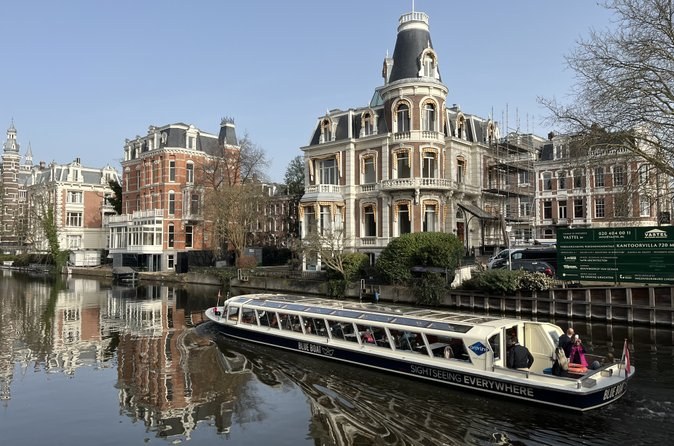
Ninety minutes walking and an hour afloat, with a car at both ends and no waiting about outdoors between them.
From $702 per group of up to 7