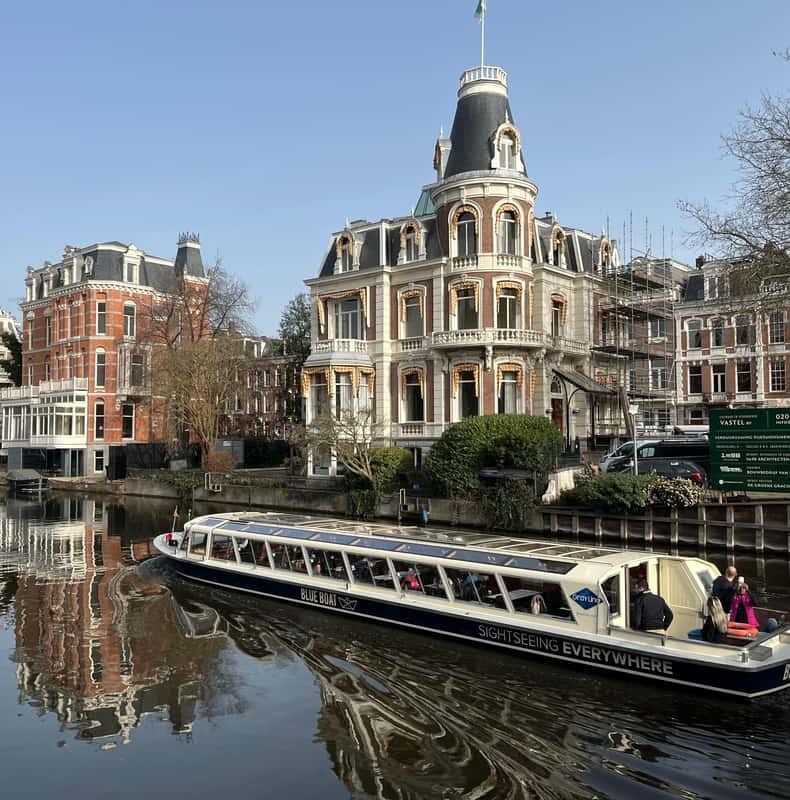
Amsterdam Layover: Walking Tour, Canal Cruise & Transfer
Airport pickupCanal cruisePrivate
A fixed four hours — two walking, one afloat, thirty minutes of car at each end.
From $330 per person
A layover itinerary is not a shorter holiday itinerary. It is an exercise in subtraction: the hours on your ticket, minus everything that is not sightseeing, equals what you can actually plan.
Four deductions, in this order.
A six-hour gap leaves about three usable hours. Eight leaves five. Ten leaves seven. Those are the numbers every band below is built on.
One neighbourhood, walked properly, or one loop by car.
On foot: out of Centraal, down the Damrak to Dam Square, twenty minutes on the square, then the Nine Little Streets and back. About seventy-five minutes of walking with time to stop.
By car: Museumplein, along the Amstel past the Heineken Experience, the maritime quarter, Dam Square, and past the Anne Frank House. More ground, less texture.
What does not fit: any museum, and any crossing between the canal ring and Museumplein on foot.
The walk plus an hour on the water. Two hours through the historic centre with a guide, then a glass-topped boat through the canal belt, with transfers either side.
Four hours is the shortest window in which the canal ring makes sense from both street level and the water, and seeing both is worth more than seeing either twice.
A neighbourhood in depth, or a museum if you already hold a timed ticket.
Five hours is where the trade-off gets interesting. Ninety minutes inside the Rijksmuseum plus the journey is most of the window on one building. That is a fair use of it if you came for the building and a poor one if you did not.
Both clusters, if you are disciplined about it. Museumplein first, using the airport bus that goes there directly, then a tram or twenty minutes on foot into the canal ring and out through Centraal.
Or, more comfortably: one cluster properly, plus a meal. Herring from a stall, stroopwafels pressed while you wait, poffertjes at a table, or an hour in a brown bar.
The countryside comes into range. Twenty-five to forty minutes north to Zaanse Schans, about two hours among the working mills, the clog workshop and the cheese farm, then back with time to spare.
Or the city at length: a museum with a booked slot, the canal ring on foot, and a proper lunch, without hurrying any of the three.
A day out with a hard deadline. The order that works is countryside first, city second — the drive north is quicker before the morning traffic settles, and the canal ring is a better place to be in the afternoon.
Twelve hours is also the point at which a hotel starts to compete. If your gap runs overnight, the usable part is the morning, and nothing in the city is open at three.
| Usable hours | Canal ring | A museum | The windmills | A meal |
|---|---|---|---|---|
| under 2 | — | — | — | — |
| 3 | yes, one neighbourhood | no | no | a herring, standing up |
| 4 | yes, plus an hour afloat | no | no | a quick one |
| 5 | yes, in depth | one, if pre-booked | no | yes |
| 6 | yes | one | no | yes |
| 8 | yes | one | yes | yes |
| 12 | yes | one or two | yes | properly |
Eight hours and twenty minutes on the ticket. Border and bags by 08:00, in the city by 08:30. Three hours before the museums have any queue at all, an early lunch, and back on a train at 12:15 for a 12:40 arrival at the terminal. That is a comfortable day with an hour of slack in it, and it is the single best shape a Schiphol connection takes.
Six hours and fifty minutes. Landside by 13:45, in the city at 14:15, and you need to be back on a train by 16:45 for a long-haul departure. Two and a half hours. That is one neighbourhood, or a canal cruise with a short walk, and nothing more — and in December it is nearly all of the remaining daylight.
Eleven and a half hours, almost all of it overnight. Nothing in the city is open, and the usable part is the two or three hours after eight in the morning. Either take a hotel attached to the terminal and use the morning, or treat it as a night in the lounge. This is the shape people most often over-plan.
More than the map suggests, and the difference is worth budgeting for.
| Step | Optimistic | Realistic |
|---|---|---|
| Aircraft door to arrivals hall | 20 minutes | 40 minutes |
| Buying a ticket and finding the platform | 5 minutes | 10 minutes |
| Train to Centraal | 17 minutes | 17 minutes |
| Working out which way to walk | 0 | 10 minutes |
| The same in reverse, plus security | 45 minutes | 70 minutes |
The optimistic column totals about an hour and a half of overhead. The realistic one totals nearly two and a half. Plan with the second, and you will not spend the last hour of your day walking quickly.
Something always slips, and the trick is deciding in advance what goes.
Every itinerary above leaves things out, and knowing which are safe to lose is the difference between a plan and a wish.
What is never worth skipping is the meal. Twenty minutes, no booking, and it is what people describe afterwards.
In summer, very little: sunset is past ten in June and the light holds until eleven. In winter it changes everything, because the sun goes at half past four and a three o'clock arrival is already a night visit.
The canal ring is lit and the water carries it, so a dark layover is not a wasted one — but photography, the windmills and anything with a view are all daylight propositions. The month-by-month daylight table.
Half an hour, held back and spent on nothing. Not a stop, not a coffee, not a photograph — a genuine reserve you would be happy to arrive at the terminal without using.
Everything in a layover runs slightly late. The aircraft door opens five minutes after it should. The border queue is longer than the last time. A tram is held at a bridge. None of those is a problem individually, and all of them together are exactly the half hour you did not keep.
Work backwards from the gate, pick one cluster, book anything ticketed first, and add half again to every time estimate for photographs and coffee. Then compare that against what the departures at Amsterdam Layover Tours already do, because on a connection somebody else owning the clock is worth a good deal.
A fixed four hours — two walking, one afloat, thirty minutes of car at each end.
From $330 per person
Three, four or five hours, chosen at booking, with the route agreed before you fly.
From $312 per group of up to 8
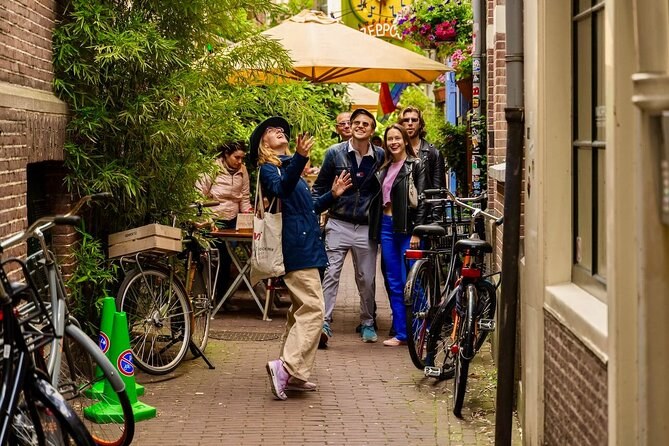
Five to seven hours built around ten tasting stops rather than around landmarks.
From $599 per person
Next: how to get in and out without a tour, or what the month you are landing in changes. For the shortest connections, see the three quick routes.