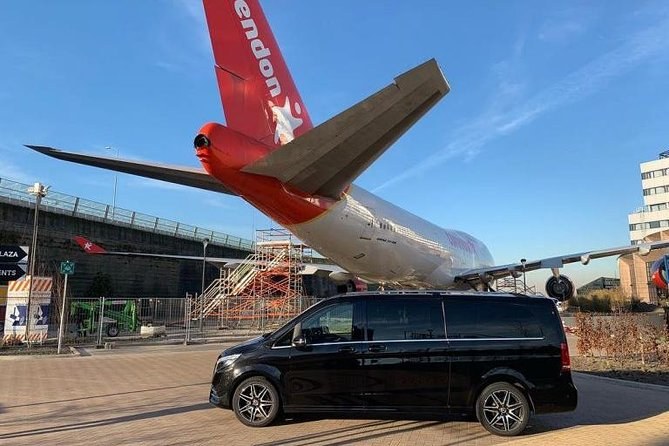
Amsterdam or Zaanse Schans private Schiphol airport layover tour
Wi-Fi on boardPrivateUp to 7
A private car from the terminal door, which is the thing no train ticket buys.
From $221 per person
There are four ways out of Amsterdam Airport Schiphol and into the city, and one of them costs €4.90. This guide says honestly when that is the right answer and when it is not.
A train, a bus, a taxi and a booked car. They are not variations on one theme; they solve different problems and they fail in different ways.
The geography is unusually kind here. The city centre is nine kilometres away and the railway station sits directly beneath Schiphol Plaza, so nobody has to reach a separate building before the journey even starts. The layout in full.
Often, and it deserves saying first. Seventeen minutes to Amsterdam Centraal, eight trains an hour, calling at Sloterdijk, Lelylaan and Hoofddorp. Buy at the yellow machines in the plaza, or simply tap a bank card at the readers by the escalators.
Take the train if your bag is checked through, your connection is comfortable, you are happy on foot, and the canal ring is what you came for. Under those conditions a booked car buys you nothing the train does not already give you, and it costs a great deal more.
It goes somewhere else. The Amsterdam Airport Express, lines 397 and N97, leaves from stop B17 and runs to Museumplein and Leidseplein — which is the museum quarter, where the Rijksmuseum and the Van Gogh Museum are.
Every ten minutes in the daytime, hourly overnight, at €6.50 one way or €11.75 return. If Museumplein is your destination, the bus saves you a change at Centraal and about fifteen minutes.
For two or more people with luggage, yes. Four train tickets cost about twenty euro before you have moved a case, and the taxi puts you at a door rather than at a station. Use the official rank rather than anyone who approaches you in the hall.
For one traveller travelling light, no. And on the return journey a taxi carries a risk the train does not: the ring road is genuinely slow at the end of the working day, and a meter can reach about seventy-five euro.
Four things, and they are all about risk rather than transport.
None of that matters on a ten-hour connection with hand luggage. All of it matters on a six-hour one with a pushchair.
| Cost, one way | Time | Luggage | Handles a late inbound | |
|---|---|---|---|---|
| Train | €4.90 | 17 minutes | with you, on a platform | irrelevant — it just runs |
| Bus 397 | €6.50 | — | with you | irrelevant |
| Taxi | €35–€55 | 20–35 minutes | in the boot | you simply take a later one |
| Booked car | from $183 for the whole tour | 20–35 minutes | in the boot | the operator adjusts to your flight |
Read that table twice. The first three rows are transport. The fourth is a day out with transport attached, which is why comparing the numbers directly tells you almost nothing.
This is the deciding factor more often than price is. If your bag is checked through to your final destination you are free, and any of the four works. If it is not, you are carrying it.
Lockers at the airport cost €8 per 24 hours and take a case up to 40 by 40 by 70 centimetres. The staffed storage in Arrivals runs €6 to €12 a piece per day. Or you put it in a boot and forget about it.
The train and the bus do not care; you simply take a later one and lose the minutes. A taxi is the same. A booked departure is where a delay actually bites — and also where somebody is watching for it on your behalf.
Free cancellation applies up to 24 hours ahead on every departure here, which covers a change of plan the day before and nothing on the day. Giving the operator your flight number is what covers the day. How the common connections behave.
Three ways, and the middle one catches people out.
A paper single from the yellow machines in the plaza. Straightforward, and it takes cards.
Tapping a bank card at the yellow readers by the escalators. This is now the normal way and it is genuinely contactless — but you must tap in and tap out again at the other end, and forgetting the second tap is the mistake that costs money.
A travel card, which is worth nothing on a layover. You will make two journeys, and the card costs more than they do.
Only the car. There is no direct train from the airport to Zaanse Schans, and public transport asks for two changes and the better part of an hour and a half each way. That single fact is why almost every product going north is a private vehicle.
The same applies to Volendam and Marken, which have no railway at all. The windmills tours, compared.
Both come up, and both are worse ideas here than they sound.
A hire car means a desk, a contract, a fuel policy and a return, all inside a window that is already tight. Then it means parking, and Amsterdam has spent two decades making that expensive and scarce on purpose. Unless you are driving on somewhere else entirely, the hire desk costs you more time than the car saves.
A bike is the opposite problem: it is the right way to see this city and the wrong way to arrive in it. You cannot take one on the airport train at peak times without a supplement and a folding frame, hire shops are in the centre rather than at the terminal, and cycling in traffic you have never met, jet-lagged, with a case, is not a relaxing first hour. Hire one on a trip, not on a connection.
The return is where connections are actually lost, and it fails in three predictable ways.
| Your situation | Take |
|---|---|
| Long connection, hand luggage, canal ring only | The train |
| Heading straight for the museum quarter | Bus 397 from stop B17 |
| Two or more of you with cases, going to one address | A taxi |
| Tight margin, or bags, or children, or a route rather than a destination | A booked car |
| Anywhere north of the city | A booked car — nothing else goes |
If the answer is a booked car, every private Amsterdam layover tour is compared with the hours it needs and the basis its fare is counted on. If it is the train, you now know everything you need and the fare is under five euro. Either way, the full comparison lives at Amsterdam Layover Tours.
A private car from the terminal door, which is the thing no train ticket buys.
From $221 per person
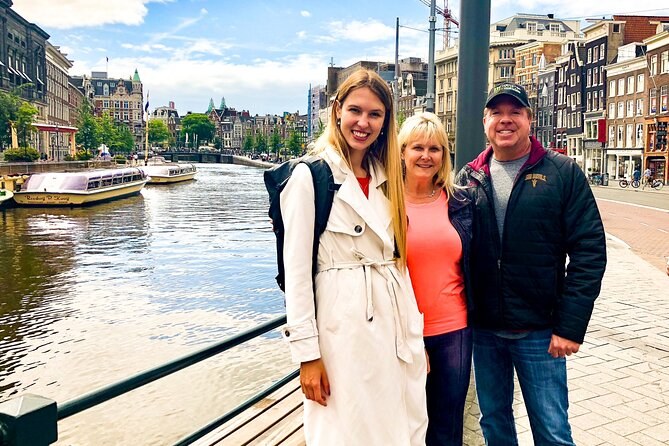
The middle path: a host who meets you at the airport and takes the train in with you.
From $309 per person
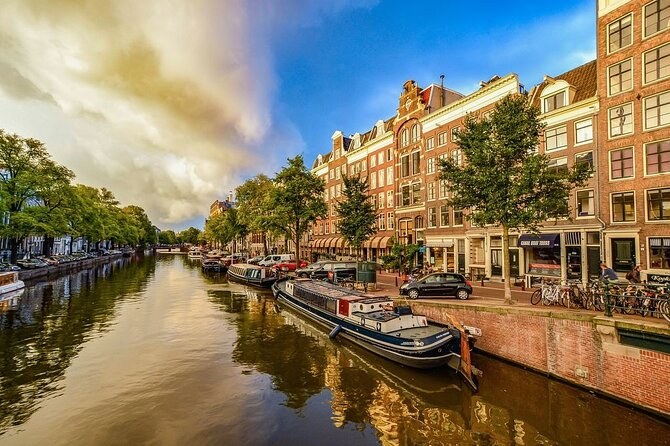
The same idea over five hours on foot, with the fast train both ways inside the fare.
From $218 per person
Next: what a booked departure costs, and where the crossover sits, or where everything is relative to the terminal. To weigh the formats, start with choosing a tour.